5 Hidden Signs Your Liver May Need Help
Liver disease is often silent. The liver can lose a large part of its working capacity before jaundice or a swollen abdomen appear – but the body usually drops quieter hints first. Here's how to spot them, and which simple tests can tell you more.
This article is for general education. These signs have many possible causes – only tests and a doctor's assessment can tell whether your liver is involved.
Why liver disease is easy to miss
The liver has no pain-sensing nerves inside it, and it has a large reserve. It can keep doing its work – filtering blood, making proteins, storing energy and producing bile – even while it is being damaged. Many people find out about a liver problem only from a routine blood test or an ultrasound done for something else.
In India, the most common causes are fatty liver linked to diabetes and weight gain, alcohol, and hepatitis B and C. All three can progress quietly for years.
Slide through the stages of liver damage
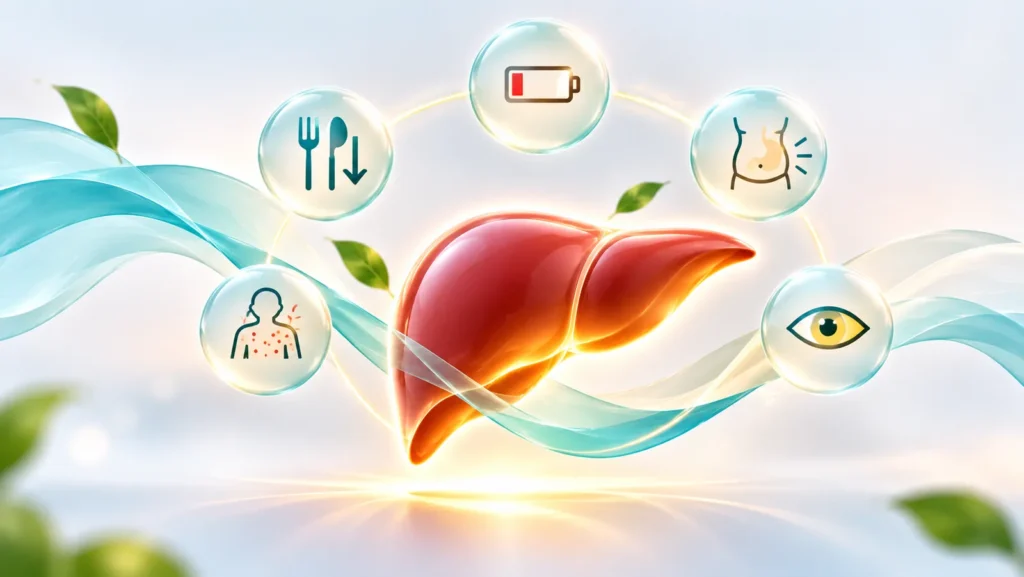
Five quiet signs worth noticing
None of these signs on its own means you have liver disease – each has other common causes. But if one keeps coming back, or you notice two or three together, it's worth asking your doctor to check your liver. Tap a point on the body, or a sign in the list.
Tiredness that rest doesn't fix
- What you may notice
- Feeling drained most days, even after a full night's sleep; less stamina for work, walking or climbing stairs.
- Why the liver is involved
- Fatigue is one of the most common complaints in chronic liver disease, including fatty liver and hepatitis. Changes in how the brain and muscles are fuelled, and loss of muscle, both play a part.
- What to do
- Tiredness has many causes – anaemia, thyroid problems, poor sleep, low mood. Ask your doctor to include liver tests when you're checked, especially if you have diabetes or drink alcohol regularly.
Itching without a rash
- What you may notice
- Itching with no visible rash, often worse at night and sometimes on the palms and soles.
- Why the liver is involved
- When the flow of bile slows down – from a blocked bile duct or conditions that affect the small bile ducts – substances normally cleared in bile build up and can cause itching.
- What to do
- Persistent itching without a skin cause deserves a blood test, including liver function tests. If it comes with yellow eyes, dark urine or pale stools, see a doctor promptly.
Bruising or bleeding easily
- What you may notice
- Bruises you can't explain, nosebleeds, bleeding gums when brushing, or small cuts that keep oozing.
- Why the liver is involved
- The liver produces clotting factors – the proteins that help blood clot. When the liver is compromised, clotting factors fall and there is a tendency to bleed. In a scarred liver, the spleen also becomes enlarged and destroys platelets, the blood cells that seal small cuts.
- What to do
- Mention it to your doctor. A blood count and clotting test (INR) take minutes and help show whether the liver is involved. Don't start blood thinners or painkillers like ibuprofen on your own.
Spider veins and red palms
- What you may notice
- Small red spots with fine “legs” spreading out, usually on the face, neck, chest or upper arms, that fade when pressed. Palms that look unusually red, especially at the edges.
- Why the liver is involved
- A struggling liver handles hormones such as oestrogen differently, which widens small blood vessels in the skin. A few spider veins can be normal – in pregnancy or in children – but several new ones in an adult are a clue worth checking.
- What to do
- Show them to your doctor at your next visit. They are painless and harmless themselves, but they can point to an underlying liver problem.
Poor sleep and brain fog
- What you may notice
- Sleepy in the day and awake at night, forgetfulness, slower thinking, or family noticing you're “not yourself”. Handwriting can become untidy.
- Why the liver is involved
- When the liver can't clear toxins such as ammonia from the blood, they affect the brain. In its mildest form – called minimal hepatic encephalopathy – it can be missed for months, yet it slows reaction times.
- What to do
- If you have known liver disease, tell your liver team about any change in sleep or concentration – it is treatable. Avoid driving if you feel slowed down until you've been assessed.
Should you get your liver checked?
Because liver disease is often silent, the people most at risk benefit from a check even without any symptoms. Tick anything that applies to you.
This checklist is not a diagnosis and doesn't replace a doctor's assessment. It simply shows where a liver check is commonly advised.
The simple tests that find it early
Most liver problems can be picked up with a blood test and a scan. Tap each test to see what it shows.
Measures liver enzymes (ALT, AST, ALP, GGT), bilirubin and albumin. Raised enzymes suggest the liver is under strain. Normal results don't always rule out liver disease – enzymes can be normal in fatty liver and even in cirrhosis.
Shows fat in the liver, its size and texture, the bile ducts, and any lumps. It is often how fatty liver is first found.
A quick, painless, ultrasound-like test (transient elastography) that measures both the amount of fat in the liver and how stiff it is – stiffness is a sign of scarring. It often avoids the need for a biopsy.
Hepatitis B and C can live in the body for years without symptoms. Get vaccinated for hepatitis B if you haven't been. Testing for hepatitis C is done when indicated – and if found, it can usually be cured with tablets.
FIB-4 uses your age, AST, ALT and platelet count to estimate the chance of significant scarring. It is a common first step for people with fatty liver, to decide who needs a FibroScan.
A normal liver blood test is reassuring, but it isn't the whole story. If you're at risk, ask whether you also need an ultrasound or a FibroScan.— Why one test is rarely enough
Six common myths about the liver
Tap each card to see the fact.
When a sign is no longer “hidden”
These signs mean the liver may be struggling more seriously. See a doctor the same day – and if you already have liver disease, call your liver team.
Key takeaways
- Liver disease is often silent – quiet signs can appear long before jaundice.
- Ongoing tiredness, itching without a rash, easy bruising, spider veins and poor sleep are worth mentioning to your doctor.
- Diabetes, extra weight, alcohol and hepatitis B or C are the main risks.
- A blood test plus an ultrasound or FibroScan finds most problems early.
- Caught early, many liver conditions can be slowed or reversed.
Quick answers
What are the early signs of liver damage?
Often there are none. When signs do appear early, they tend to be vague: tiredness, loss of appetite, itching without a rash, easy bruising and changes in sleep or concentration. Jaundice and a swollen abdomen usually come later.
Does liver disease cause pain?
Usually not in the early stages, because the liver itself has no pain-sensing nerves. Some people feel a dull ache or heaviness under the right ribs when the liver is enlarged.
Which test checks liver health?
A liver function blood test is the usual first step, often with an ultrasound. A FibroScan measures fat and scarring. Your doctor may also advise hepatitis B vaccination, and testing for hepatitis C when indicated.
Can the liver heal itself?
The liver can regenerate. Fatty liver and early inflammation often improve when the cause is treated – for example losing about 7–10% of body weight, stopping alcohol or treating hepatitis. Established cirrhosis usually doesn't fully reverse, but its progress can often be slowed.
Can fatty liver make you tired?
Yes, tiredness is a common complaint in people with fatty liver, although it has many other possible causes. Improving diet, activity and sleep often helps both.